
From the Shore to the Market: How Fishermen’s Wives in Kedungcowek Turned the Tide with Fish Processing Skills
Published on September 18, 2025
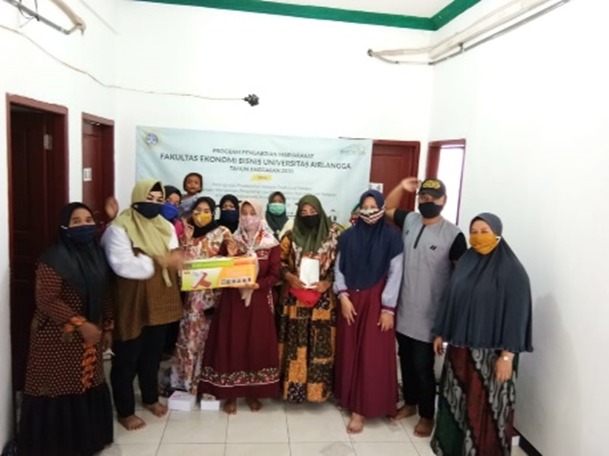
From the Shore to the Market: How Fishermen’s Wives in Kedungcowek Turned the Tide with Fish Processing Skills
In Kedungcowek, a coastal village in Surabaya’s Kenjeran District, the rhythm of life has always been tied to the sea. Men set out at dawn to cast their nets, while their wives wait anxiously on shore, ready to sell the day’s catch. Yet for years, this community of traditional fishermen remained trapped in a cycle of poverty. Their fresh fish, sold hastily to middlemen at low prices, rarely brought in enough to cover household needs.
The women, often left to manage the household economy, knew they had to find ways to add value to what their husbands brought home. Some turned the fish into salted snacks or crackers, but the efforts were modest—limited packaging, short shelf lives, and little market appeal. Without new skills, their work barely made a difference.
That’s when a community service team from Universitas Airlangga stepped in. Their goal was clear: to empower fishermen’s wives with the knowledge and tools to manage fish processing and preservation more effectively, turning a fragile livelihood into a sustainable source of income.
A New Way of Seeing Fish
The training sessions began with a simple but powerful idea: fish is not just a perishable catch to be sold quickly; it is a resource that, with proper processing, can yield long-lasting and profitable products. Guided by experts and supported by local cooperatives, the women learned hygienic handling methods, attractive packaging techniques, and the importance of branding.
For the first time, they were introduced to a vacuum sealer machine, a tool that removes oxygen from packaging to preserve freshness. “We had never seen anything like it,” one participant admitted. “Before, we wrapped our products in whatever was available. Now, we know how to seal them properly so they can last longer and look more appealing.”
From Salty Fish to Crispy Delights
Armed with new knowledge, the women began experimenting. Traditional salted fish evolved into crispy bulu ayam fish, a small pelagic species common in Kenjeran waters. Cleaned, seasoned, and fried to perfection, the fish became a crunchy snack with wide appeal. Others turned dried shrimp into ebi balado, a spicy, ready-to-eat condiment perfect as a side dish.
These innovations weren’t just about taste, they were about pride. The women agreed to market their products under a new brand: KABONE (Komunitas Bojone Nelayan, or “Fishermen’s Wives Community”). For them, the name symbolized unity, identity, and a step toward independence.
Learning the Language of the Market
Beyond processing, the women were trained in business management and marketing, including the use of social media. They practiced photographing their products, writing catchy captions, and promoting them to online buyers. It was a leap from the traditional ways of selling by the roadside or local markets.
“Before, we felt invisible. Our products were ordinary,” said one of the wives. “Now, we can show the world what we make, and people are interested.”
The Ripple Effect
The impact of the program has been transformative. With better skills, attractive packaging, and stronger branding, the women’s products reached new customers and fetched higher prices. Household incomes began to rise, giving families more stability. More importantly, the women discovered a sense of agency.
Where once they waited for their husbands to return from the sea, now they actively shaped the family economy. Their work no longer ended at the shoreline, it extended into kitchens, shops, and even online spaces.
The program also produced broader outcomes: academic publications, media coverage, video documentation, and a legacy of improved practices in Kedungcowek. But perhaps its greatest achievement was less tangible, the confidence instilled in a community that had long felt powerless.
As one participant put it, holding up a packet of crispy fish with the new KABONE label: “This is more than just food. This is our future.”